
The 3 AM Wake-Up Call You're Ignoring
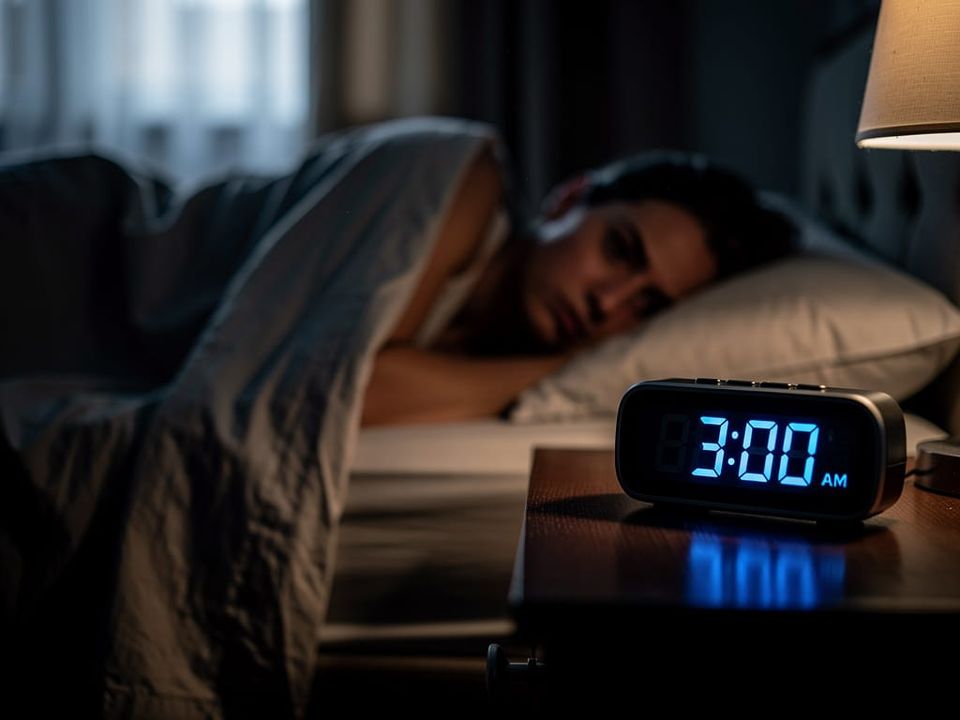
Your Body Is Sending You a Memo at 3 AM
You fall asleep without a problem. You wake up at 3 AM - wide awake, mind already running the morning's agenda - and you cannot get back to sleep for an hour. You've probably chalked it up to stress or a bad night. Here's the truth: it's neither random nor a minor inconvenience. It is a precise, physiological signal that your body's stress architecture is under serious strain.
This specific window - between 2 AM and 4 AM - is when your cortisol cycle begins its natural ascent, preparing your body to wake and mobilize energy for the day ahead. In a well-regulated nervous system, that rise is gradual and gentle. But when your HPA axis - the hypothalamic-pituitary-adrenal system governing your stress response - is chronically overloaded, that cortisol spike comes too early, too sharply, and it pulls you out of deep sleep like an alarm you never set.
The High-Performer's Hidden Hormonal Cost

High-achieving women are disproportionately affected by this pattern, and the research backs that up. A 2021 study published in Psychoneuroendocrinology found that women in high-demand professional roles showed significantly elevated nocturnal cortisol levels compared to their male counterparts in equivalent positions - a gap researchers linked to the compounding effect of emotional labor, perfectionism, and identity-based performance pressure. The body does not distinguish between a difficult board presentation and a physical threat. It logs both as danger, and it keeps the tab running long after you've closed your laptop.
What makes this particularly insidious for women in leadership is the feedback loop it creates. Poor sleep quality degrades prefrontal cortex function - the exact region responsible for strategic thinking, emotional regulation, and executive decision-making. You wake up already behind, already reactive, already reaching for caffeine that will further dysregulate your cortisol curve by midday. The cycle compounds quietly, for months, sometimes years, before it announces itself as burnout, anxiety, or a thyroid panel that finally raises a flag.
What Your 3 AM Wake-Up Is Actually Telling You
Let's be specific about what the body is communicating, because vague wellness advice will not serve you here. Waking consistently between 2 AM and 4 AM - especially with a racing mind, mild heart pounding, or an inexplicable sense of dread - points to one of three primary drivers: dysregulated blood sugar, elevated nocturnal cortisol, or suppressed melatonin production from chronic blue light and late-screen exposure. In many high-performing women, all three are operating simultaneously.

Blood sugar is the most overlooked piece of this puzzle. When you skip dinner, eat a low-carb meal late, or drink alcohol in the evening, blood glucose drops in the early morning hours. The body interprets this as a metabolic emergency and releases adrenaline and cortisol to compensate - which is precisely what wakes you up at 3:07 AM with your heart tapping against your ribs. A small, protein-anchored snack before bed - something as simple as almond butter on a rice cake - can interrupt this cascade entirely for some women.
The Protocol That Actually Moves the Needle
Reclaiming your sleep architecture is not about adding more to your already dense routine. It is about removing the inputs that are keeping your nervous system in a low-grade state of emergency around the clock. The most evidence-supported interventions are deceptively simple: consistent wake times (even on weekends) to anchor your circadian rhythm, magnesium glycinate taken 30 minutes before bed to support GABA activity and muscle relaxation, and a hard boundary on screens after 9 PM to allow melatonin to rise without interference.
Beyond the biochemistry, there is a deeper recalibration worth naming. Many women who experience chronic 3 AM waking describe the same thing when they sit with it honestly - a background hum of unfinished business, of things left unsaid or undecided, of a life running slightly ahead of the woman living it. The nervous system is not malfunctioning. It is doing exactly what it was designed to do: keeping you alert to unresolved threat. The work, then, is not just nutritional or hormonal. It is also about closing the loops - the professional, relational, and personal ones - that your subconscious is dutifully monitoring while you sleep.
Your 3 AM wake-up is not an obstacle to your performance - it is the most honest performance review you will ever receive.