
The Productivity Myth: Why Rest Is Your Most Profitable Business Strategy

Let's just be honest for a second. The pressure to be 'on' 24/7 is absolutely exhausting, isn't it? As high-achieving women, we've been sold this idea that our value is directly tied to our output. We fill every second of our calendars, convinced that one more email, one more project, one more meeting will be the thing that gets us ahead. We wear burnout like a badge of honor, and we've completely forgotten that our brains and bodies aren't machines.
But what if I told you that this constant grind isn't just unsustainable, it's actually bad for business? It's time we dismantle this productivity myth. True success, the kind that feels as good as it looks, isn't about doing more; it's about being more effective. And the secret sauce to that effectiveness isn't another app or a new time-management hack. It's rest. Real, intentional, unapologetic rest is your most powerful, and profitable, strategic advantage.
Your Brain on Overdrive vs. Your Brain on Rest
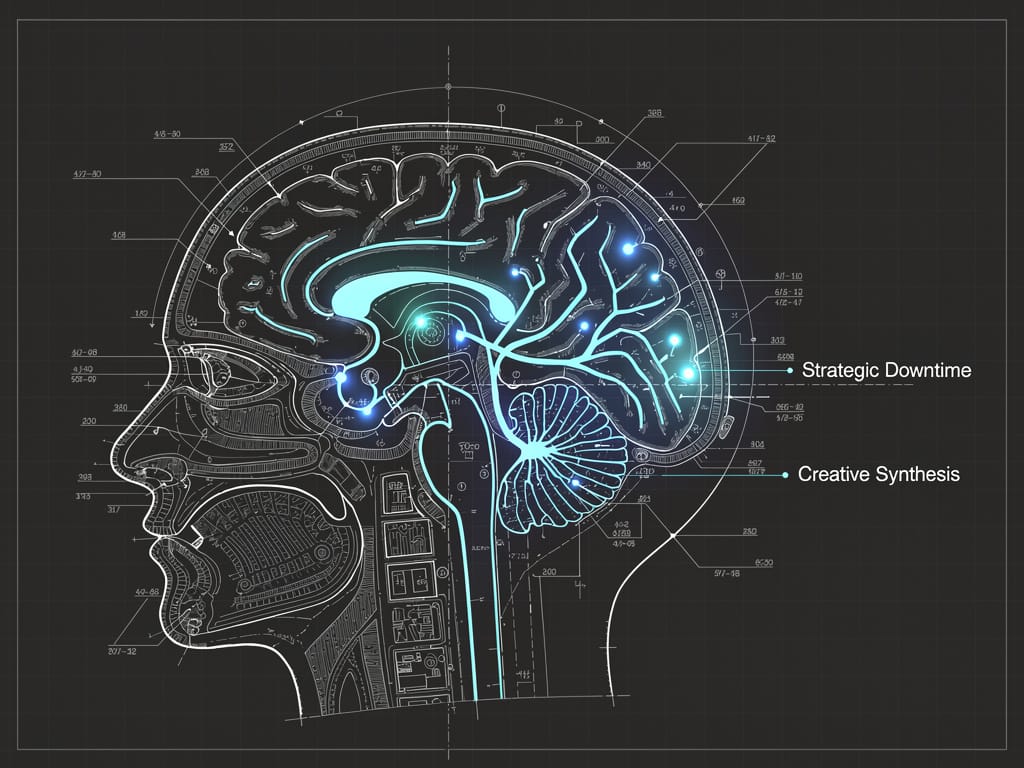
You wouldn't run a marathon without water breaks, so why do we expect our minds to perform at peak levels without ever pausing? Pushing through exhaustion isn't a sign of strength; it's a sign that you're ignoring some pretty clear biological signals. Let's break down what's really happening up there.
- The Point of Diminishing Returns is Real
You've felt it. That moment when you've been staring at the same spreadsheet for an hour and you're just moving numbers around. That's not you being lazy; that's cognitive fatigue setting in.- When you're overworked, your prefrontal cortex-the part of your brain responsible for executive functions like decision-making and problem-solving-starts to get tired. This leads to more mistakes and poorer judgment.
- Creativity requires mental space. When you're constantly in 'execution mode,' you shut down the very pathways that lead to those brilliant, out-of-the-box ideas.
- 'Doing Nothing' is When the Magic Happens
Neuroscience has shown us something amazing. When you're not actively focused on a task-maybe you're on a walk, staring out the window, or in the shower-a specific network in your brain called the Default Mode Network (DMN) lights up.- Think of the DMN as your brain's internal 'think tank.' It's where you connect disparate ideas, have 'aha!' moments, and do your best long-term planning.
- By constantly staying busy, you're robbing yourself of this incredible built-in feature. Allowing your mind to wander isn't a waste of time; it's a critical part of the creative and strategic process.
How to Build a 'Rest Portfolio' That Works for You
Okay, so we agree rest is good. But how do we actually *do* it without feeling guilty or like we're falling behind? It's about being just as intentional with your downtime as you are with your work time. You need to build a 'rest portfolio' that recharges you on every level.
- Differentiate Between Active and Passive Rest
Not all rest is created equal. Binge-watching a show might feel relaxing, but it's often more of a numbing activity than a restorative one. You need a mix of both passive and active recovery.- Passive Rest is about complete shutdown. This includes getting enough quality sleep, taking a 20-minute power nap, or practicing meditation where the goal is to quiet the mind.
- Active Rest involves low-stress activities that engage a different part of your brain. This could be a walk in nature, working on a creative hobby, listening to music, or having a great conversation with a friend.
- Schedule Downtime Like It's a Board Meeting
If it's not on the calendar, it doesn't exist. I know it sounds counterintuitive to schedule spontaneity, but for busy people, it's the only way to make sure it happens.- Block out non-negotiable time for rest in your calendar. It could be 15 minutes between meetings to walk around the block or a full 'no-screen' hour before bed.
- Protect this time fiercely. It's not 'free time' that can be filled with errands or more work. It's a critical appointment with yourself for maintenance and strategic thinking. It’s an investment in your performance, not an expense.

Shifting your mindset from 'rest is a reward' to 'rest is a requirement' is a total game-changer. It's not about weakness or a lack of ambition. It's about understanding how your body and brain actually work and using that knowledge to your advantage. When you're well-rested, you're not just a better version of yourself-you're a better leader, a sharper strategist, and a more creative thinker. You bring more to the table because you haven't left it all on the gym floor of hustle culture.